
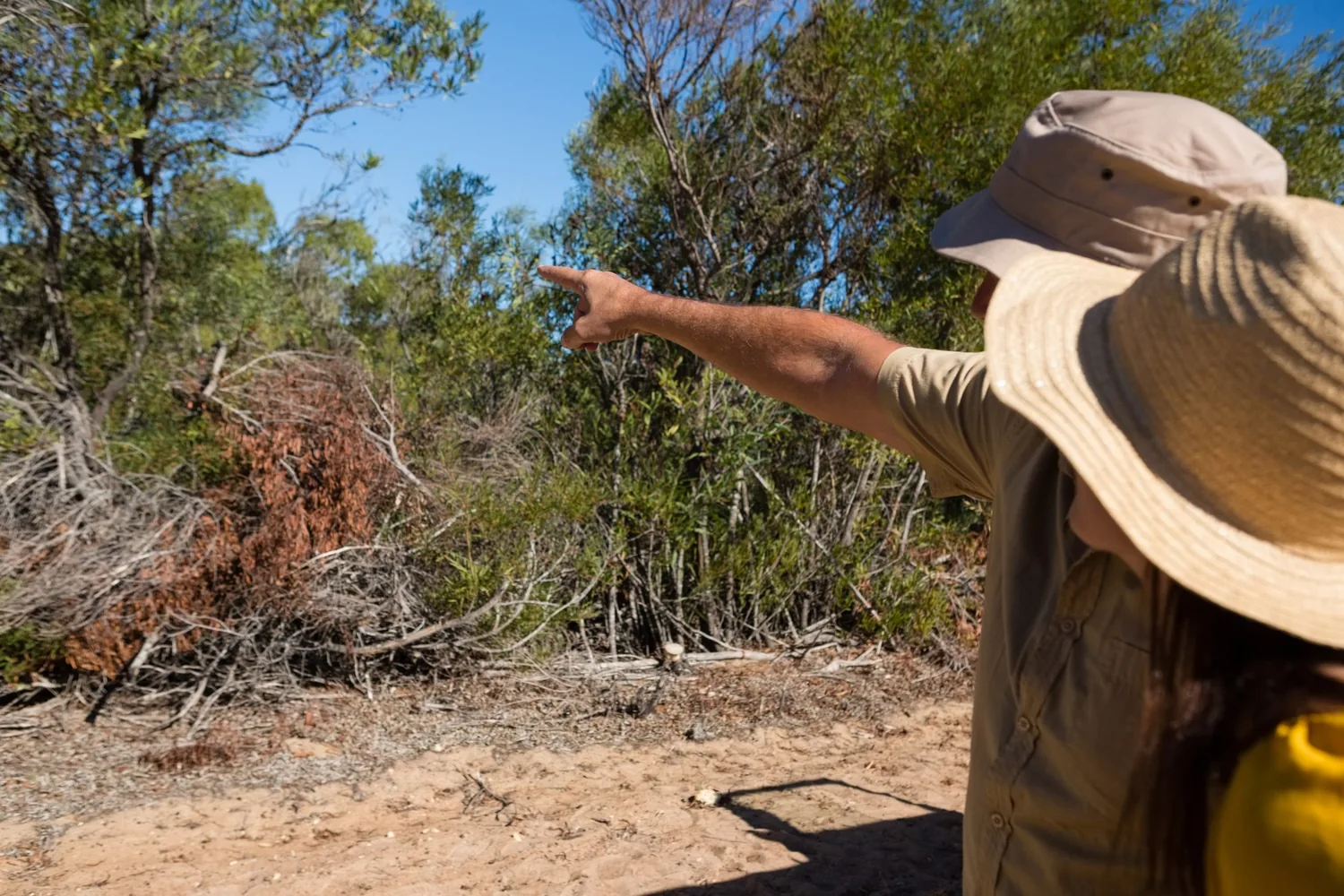
He stops the vehicle without a word and points at nothing. A minute passes. Then the grass moves, and a leopard you would have driven straight past steps onto the track, unhurried, as if it had been waiting for an audience. That is what a great safari guide gives you: the ability to see a landscape that was hiding in plain sight.
Lodges, views and wildlife all matter on safari. But ask travellers what made their journey, and most will name a person. At Nova Earth Safaris, where we design privately guided, personalised journeys focused on eco-tourism and protecting Africa’s wildest regions and animals, we think of guiding as the heart of the whole experience.
Reading a language most of us have forgotten
The bush is constantly talking. An alarm call from a francolin. Impala standing frozen, every head turned the same way. A smudge of fresh tracks crossing a sandy road, the edges still crisp. Vultures circling, or more tellingly, sitting in a tree and refusing to come down.
Experienced safari guides read these signs the way you or I might read a street. They know which way a pride tends to move after a night’s hunting, where a female leopard has been leaving her cubs, which waterhole the elephants favour once the afternoon heat sets in. That knowledge is built over years in one landscape, and it turns a drive from hopeful wandering into something closer to detective work.
Patience, and knowing when to wait
Some of the best moments on safari come from doing nothing at all. A good guide knows when a sighting is about to change: when lionesses have begun to fan out through the grass, when a cheetah has fixed her gaze on a gazelle, when a sleeping leopard’s tail has started to twitch.
Knowing whether to stay or move on is a skill. It is also where private guiding, where booked, makes a real difference. Without other guests to please, your guide can wait with you for as long as the moment needs, and leave when it is truly over.
Safety that you barely notice
The best guides make wild places feel calm. They position the vehicle so animals are never crowded or cornered, read an elephant’s mood long before it becomes a concern, and know exactly how close is close enough. On foot, an armed guide leads with quiet confidence, explaining what to do and, just as importantly, why.
That calm is the result of training, experience and constant attention. You might only notice it in hindsight, which is precisely how it should be.
Storytellers of the landscape
A great guide does more than find animals. They explain why the oxpecker rides the buffalo, why a termite mound matters to an entire ecosystem, how a dung beetle steers by the stars. They know the names of the trees and the medicinal uses of the bark, the stories behind the place names, and the histories of the communities who have lived here for generations.
These stories give context to everything you see. A lone giraffe becomes part of a larger picture of browsing, water and seasons. A dry riverbed becomes a road for elephants. You leave understanding the landscape, not just having looked at it.
A guide who learns you
By the second day, a thoughtful guide has worked out what lights you up. The photographer gets vehicle positioning planned around the light and the background. The birder gets the patience to stop for a lilac-breasted roller, and then another. Children get bones, tracks and dung to examine, and questions answered without a hint of impatience. Travellers who want quiet get it.
This is where a personalised safari truly comes alive. The guide adjusts the pace, the route and the conversation to suit you, and the journey begins to feel as though it was always meant to be yours.
Guides as guardians of the wild
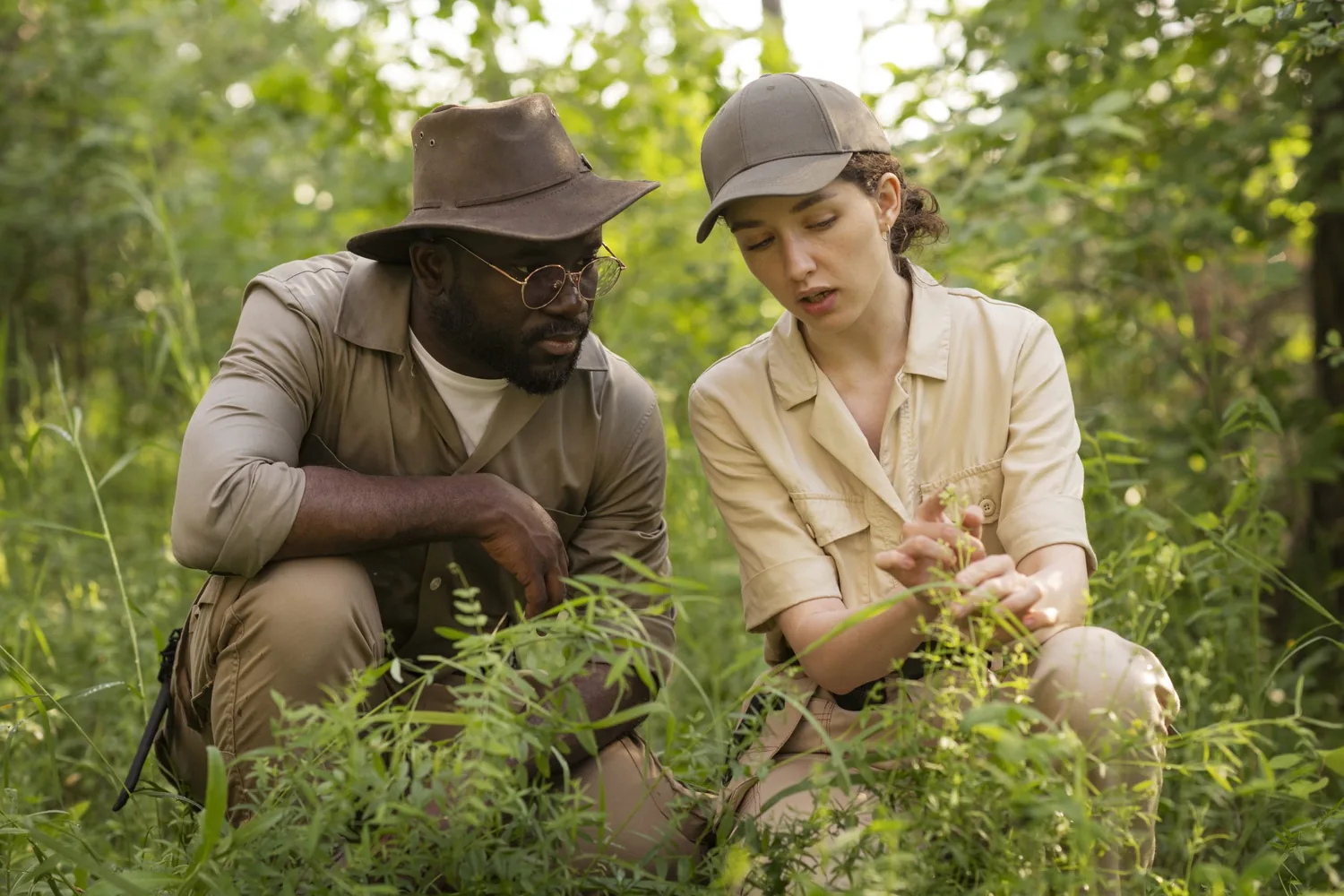
Many of the best safari guides grew up in or near the landscapes they work in, and their knowledge carries the weight of that connection. Guides are often the first to notice a snare, a sick animal or a change in the land. Their presence, and the tourism that pays their wages, can help make wild places worth more protected than cleared.
Choosing well-run camps that invest in their guides and their neighbouring communities is one of the most practical ways travellers can support conservation. It is a principle that guides how we plan every journey.
Different landscapes, different skills
Guiding looks different across Africa. In the Masai Mara and the Serengeti, guides track the movement of big cats and the vast herds of the migration across open plains. In the Okavango Delta, a poler might guide you by mokoro through narrow channels, reading the water as much as the land. In the Sabi Sands, trackers and guides often work as a pair, one seated on the front of the vehicle reading the ground. In Zimbabwe’s Hwange and beyond, walking guides bring you face to face with the small details most people never stop to see.
We look beyond the headline parks too, to quieter conservancies and concessions where guiding can be more intimate and less hurried. Matching you with the right landscape and the right style of guiding is a large part of how we design a journey.
How we think about guiding when we plan
Our guests travel from the United States, Canada, Europe and the Gulf, and our team works across Dubai, the US and South Africa. Whatever the starting point, we ask the same questions early on. Would you prefer a private guide and vehicle? Is walking important to you? Are you travelling with children, or with serious camera gear? Do you want to understand conservation work up close?
The answers shape the camps we suggest and the arrangements we request, so the guiding fits the way you want to experience the bush.
The person you will remember
Long after the photographs are sorted, it is often the guide who stays with you: the soft voice at the waterhole, the sudden grin when the tracks proved right, the moment they turned off the engine and let the silence do the talking.
If you would like a journey built around that kind of guiding, talk to our team. We will listen first, and start shaping something that could only be yours.