
A family safari works when it is planned around the two people with the most specific needs: usually the youngest child and the oldest grandparent. If the transfers, the activities and the rooms work for them, they will almost always work for everyone in between.
This guide follows the decisions families actually make, in roughly the order we work through them with guests: where to go, what the children are allowed to do, how grandparents will get around, how everyone sleeps, how long the travel days are and how many nights to stay in each place.
1. Choose the destination around your family, not the brochure
There is no single best country for a family safari. South Africa, Kenya, Tanzania and Botswana can all be excellent, and each asks something different of a family. This is a short, honest comparison.
| Destination | Often suits | Trade-offs to weigh |
|---|---|---|
| South Africa | Families with young children; grandparents who prefer road transfers; first safaris combined with Cape Town | Malaria-free private reserves exist in areas such as the Eastern Cape and Madikwe, while the Greater Kruger is a malaria area. Many reserves are reachable by road or scheduled flight. Often the most flexible option on cost. |
| Kenya and Tanzania | Families with children old enough for full game drives; teenagers drawn to big herds, culture and the Great Migration | Malaria precautions are generally advised. Camps are often reached by light aircraft, with soft-bag luggage limits of between 15 and 20 kg per person depending on the destination. Private conservancies can offer more flexibility than national reserves. Peak migration months fill early. |
| Botswana | Families with older children or teenagers; groups who want water-based activities and a remote, low-density experience | Malaria area. Camps are usually reached by light aircraft. Many camps set minimum ages, and mokoro and walking are often limited to older children. Typically the highest cost level of the three. |
Timing matters too. Seasons differ by country and even by reserve, so July and August are not peak everywhere, and the same month can be dry season in one place and green season in another. Our month-by-month guide to Kenya and Tanzania covers East Africa in detail.
2. Check children’s ages against activity rules
Age policies vary by lodge, by activity and by whether you have a private vehicle. A few verified examples show the range:
- At Kwandwe in South Africa’s Eastern Cape, exclusive-use villa guests can set their own game drive times with no minimum age, and childminders are available by prior arrangement.
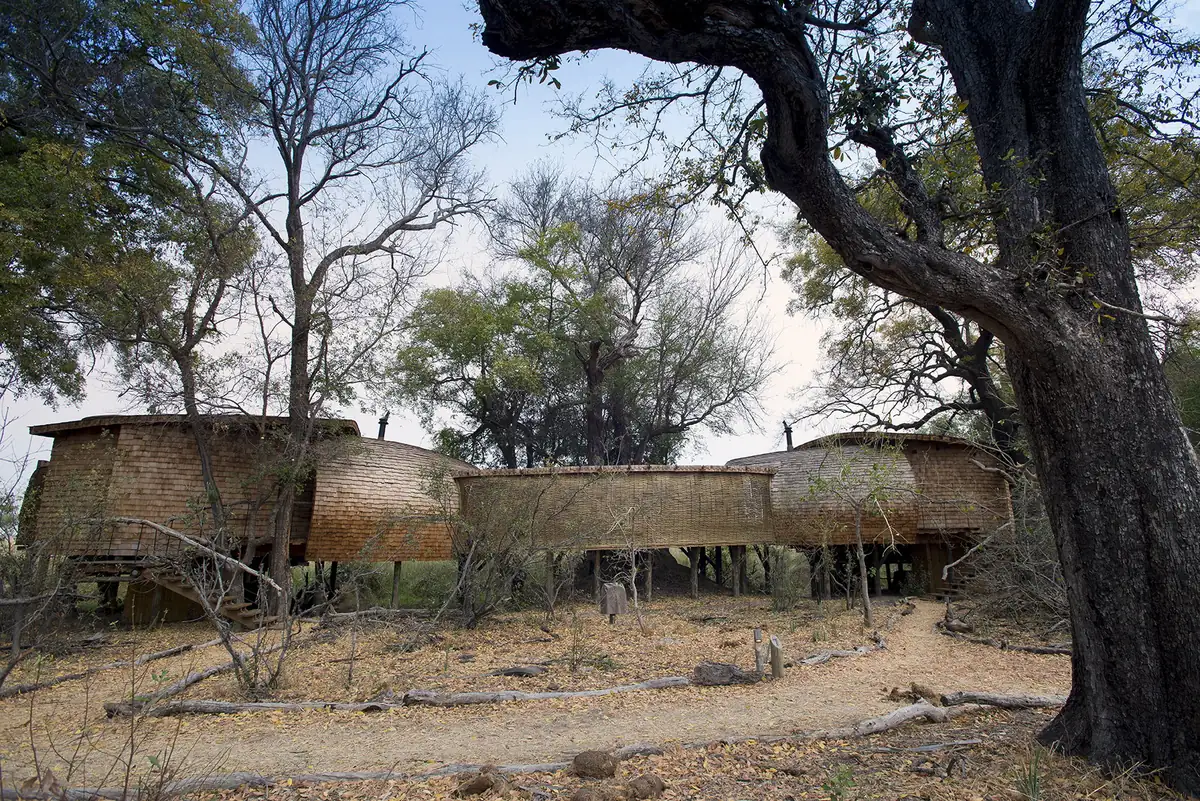
- At andBeyond Sandibe in Botswana’s Okavango Delta, children of all ages are welcome, but under-threes do not join shared game viewing activities. A children’s programme runs for ages 3 to 12.
- At Kwando’s Moremi Crossing, also in the Okavango, the minimum age is six, families with children aged 6 to 11 must book private activities, and walking and mokoro (dugout canoe) trips are for children aged 12 and over.
- Cottar’s Safaris in Kenya welcomes children of all ages at its camp and villa, with activities designed for younger children and teenagers.
- In Tanzania, Asilia’s Jabali Ridge in Ruaha National Park and The Highlands in the Ngorongoro Conservation Area both welcome children aged five and older. At Jabali Ridge, walking safaris start at 12.
The pattern to remember: a private vehicle or exclusive-use stay often opens up options that shared activities do not. Always check the policy for the specific lodge and your children’s ages on the travel date.
3. Plan honestly for grandparents’ mobility
For older travellers, the hardest parts of a safari are rarely the wildlife. They are steps into high vehicles, long sandy paths between tents and the main area, stairs to raised decks and early starts after long travel days. Ask each lodge specific questions rather than relying on a general description, and tell us about any condition that affects walking, heat or altitude. Kwandwe, for example, states that Uplands Homestead has no disabled access, which is useful to know before you fall for the photographs.
4. Decide how your family sleeps
Room names vary, so ask for a floor plan or clear description. These are the main options:
- Family suites. Two bedrooms linked by a door, walkway or shared lounge. Best for parents with younger children who need to be close at night. At Sandibe, the family suite is two suites joined by an enclosed walkway, for two adults and two children (three on request).
- Adjacent or connected tents. Ask whether rooms truly interconnect or simply sit side by side. Many camps require an escort between tents after dark, which matters with small children.
- Private villas. A house within a reserve with its own living space, pool, staff and usually a private vehicle and guide. Ideal for multigenerational groups who want their own rhythm and privacy.
- Exclusive-use camps or areas. Taking a whole small camp, or a private section of one, such as Kwando’s Splash Enclave in the Okavango, which can be reserved for groups of 6 to 10 with its own lounge, dining area and plunge pool. Suited to larger groups and celebrations.
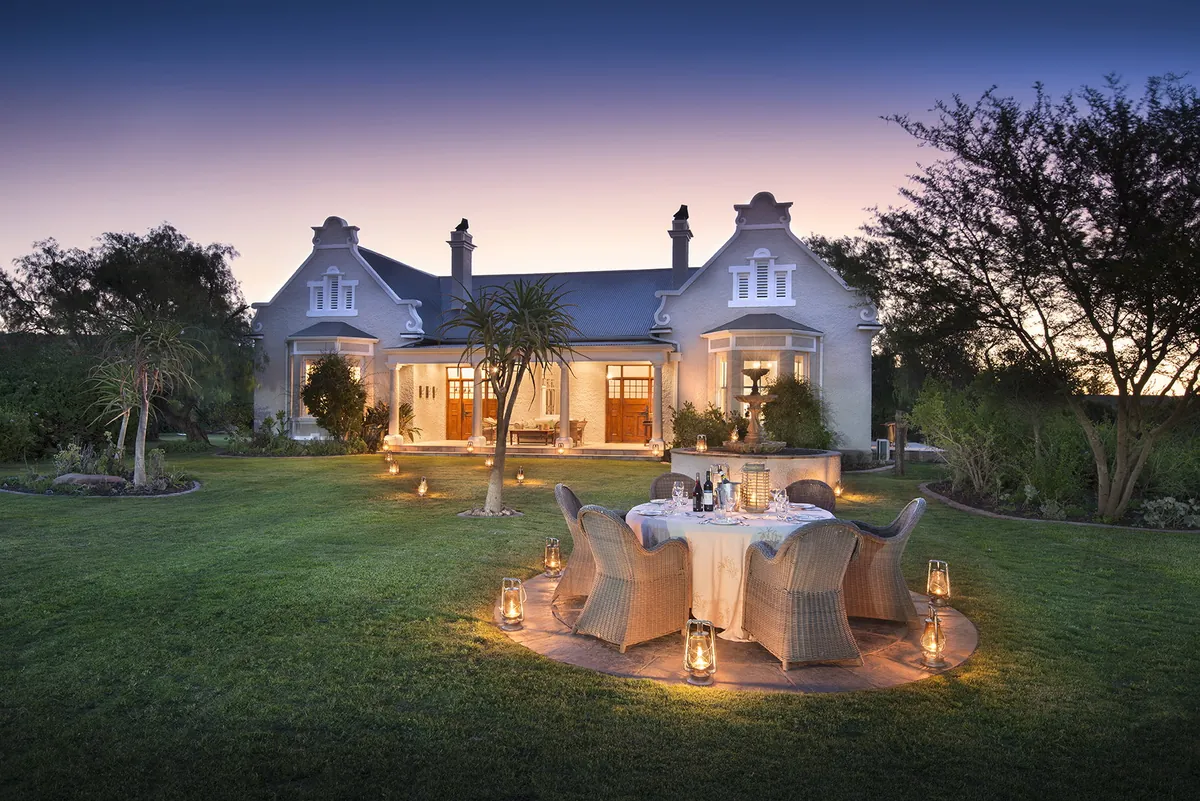
Example: Uplands Homestead, Kwandwe, South Africa
Uplands Homestead is a restored early 1900s farmhouse on Kwandwe Private Game Reserve in the Eastern Cape, booked for exclusive use. Kwandwe lists it as sleeping six in three en-suite bedrooms, plus a cot for one child under two, with its own vehicle, ranger and tracker, a swimming pool, gardens and a kitchen at the centre of the house. The reserve is malaria-free and about two hours by road from Gqeberha (Port Elizabeth) airport.
It suits a family of up to six who want a private base: young children who need flexible drive times and space to run on the lawn, parents who want an unhurried rhythm, and grandparents who prefer a road transfer to light aircraft. Its limitations are just as useful to know. It is capped at six guests plus an infant, extra beds are cots only, and Kwandwe states there is no disabled access. Larger groups or anyone needing step-free access would be better matched elsewhere.
A contrasting example: Cottar’s Bush Villa, Kenya
For a larger group who want East Africa, Cottar’s Bush Villa sits on a hilltop in the private Olderkesi Conservancy, bordering the Maasai Mara. Cottar’s describes it as exclusive-use, with five en-suite bedrooms for up to 10 guests (12 on request), a 25-metre pool, private chefs, a dedicated guide and vehicle, and a nanny service with prior booking. The trade-offs: it is a malaria area, it is usually reached by light aircraft with luggage limits, and the cost level is higher than many South African options.
Contrasting examples in Tanzania: Jabali Ridge and The Highlands
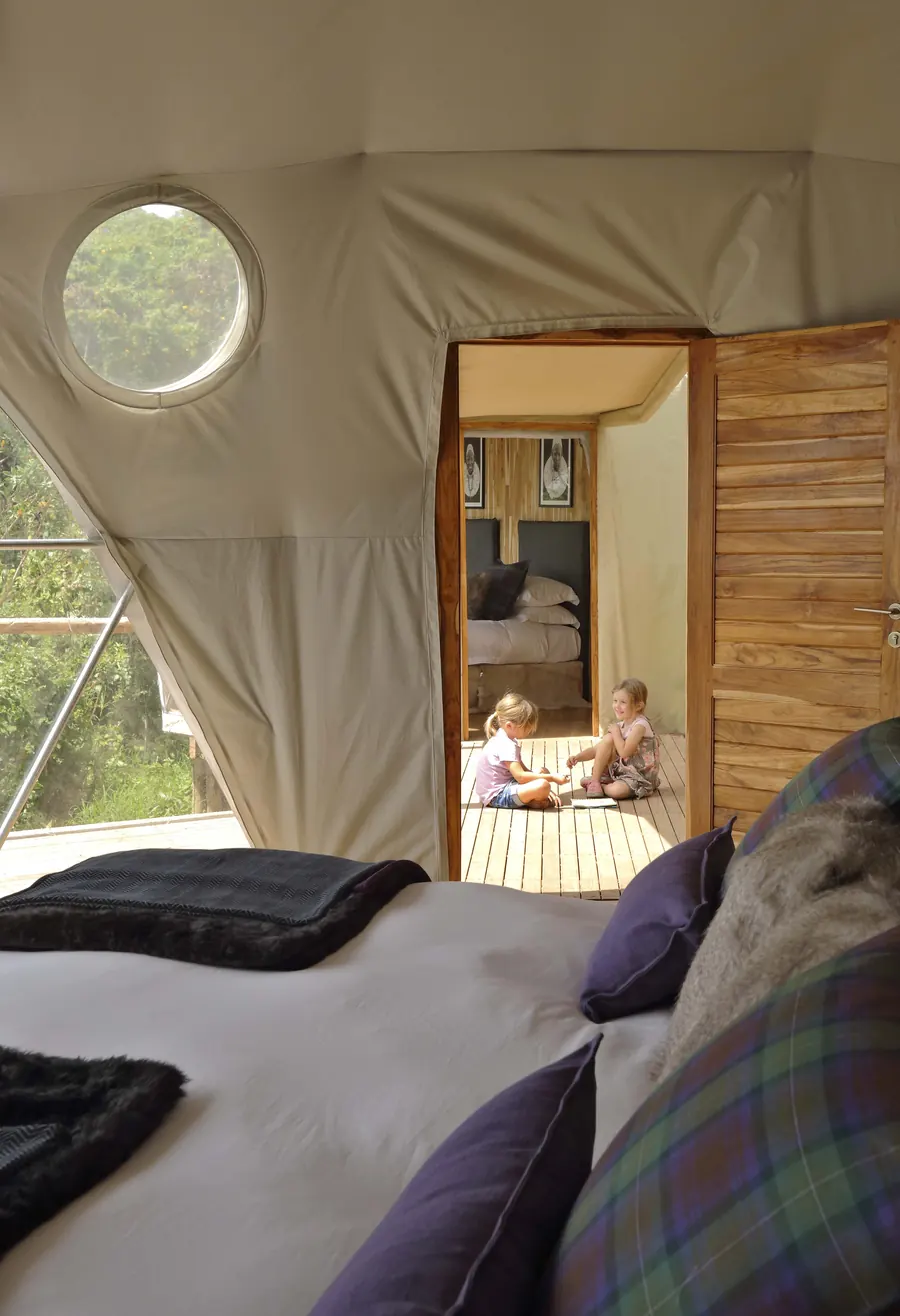
Tanzania offers two quite different family settings from the same operator. Jabali Ridge, Asilia’s lodge in Ruaha National Park, has eight suites set among granite boulders and welcomes children from age five. It is about 50 minutes by road from Msembe airstrip, closes from mid-March to the end of May, and suits families with older children who want a remote, uncrowded park. The Highlands sits on the slopes of Olmoti Crater, about an hour from the Ngorongoro Crater, with eight domed suites including one interconnected family suite, also for children aged five and over. The trade-off is access: the nearest airstrip, Lake Manyara, is around three hours away by road, which matters for younger children and grandparents.
5. Private vehicle, private guide and a travelling Nova host
These are three different services:
- Private vehicle. Your family has the vehicle to itself, so you decide when to go out, how long to stay at a sighting and when to return for a rest. For families with young children it is often the most useful addition, and some villas include it.
- Private guide. One guide who stays with your family, sometimes across several lodges, learning what each person enjoys.
- Travelling Nova host. A member of our team who travels with your family to look after logistics and smooth each transfer. We offer this as an option from the very start of planning, so you can decide early whether it suits your group.
6. Keep transfers short and build in rest
Long-haul flights from North America, Europe and the Gulf differ a lot in length and connections, so the first day should match the journey. A gentle first night near the airport or in a city, before the first early game drive, helps children and grandparents alike. After that, aim for one main transfer between each stay, and treat the middle of the day as genuine downtime for naps, swimming or reading.
7. Stay three or four nights per lodge
Two-night stays look efficient on paper but feel rushed with a family. Three or four nights in each place means fewer packing days, children settle into a routine, and older travellers can skip an activity without missing out. Two lodges over seven or eight nights, or three over ten to twelve, is a comfortable pace.
Two illustrative journey structures
These are illustrative examples to show how destination and pace can fit different families. They are not booked itineraries or packages, and every route is adjusted to your dates, ages and availability.
Example A: young children and grandparents, South Africa, about 10 nights
- Three nights in Cape Town to recover from the long-haul flight.
- Short flight to Gqeberha, then a road transfer to a malaria-free Eastern Cape reserve.
- Four nights in an exclusive-use villa with a private vehicle and flexible drive times.
- Three nights in the Winelands or on the coast before flying home.
Example B: teenagers and active parents, Kenya and Zanzibar, about 11 nights
- One night in Nairobi after arrival.
- Four nights in a private conservancy bordering the Maasai Mara, with a private vehicle, walking and cultural activities.
- Light aircraft connection to the coast, then five nights on Zanzibar for snorkelling, swimming and rest.
- One flexible night for connections home.
Holidays, celebrations, privacy and food
- School holidays. School calendars differ widely between the UAE, the UK, continental Europe, the US and Canada, and between individual schools. Confirm your dates first, then we check seasonality for the destinations you are considering.
- Celebrations. Milestone birthdays and anniversaries suit a private villa or exclusive-use camp. Let us know early so lodges can plan a meal or experience.
- Privacy. Some families want their own vehicle, dining and pool; others enjoy meeting other guests around the fire. Both are possible, so tell us which you prefer.
- Dietary arrangements. Whatever your family eats, we will make sure it is taken care of. Halal, kosher, vegetarian and allergy-aware meals can always be arranged. Tell us when you first get in touch, and we confirm every detail with each lodge before you travel.
When to book
Nine to twelve months ahead is a useful target for school-holiday trips, specific private villas and camps with only one or two family rooms. Wilderness, for example, recommends booking Botswana around 9 to 12 months ahead, especially for June to October. It is not a universal rule: shorter notice can work outside busy periods or with flexible lodge choices. Seasonality and demand vary by destination and property, so availability always has to be checked for your actual dates.
How Nova matches families to safaris
Josh Anderson, our Founder and Luxury Travel Director, managed a lodge in the Okavango Delta before founding Nova Earth Safaris, and our team works across Dubai, the US and South Africa. We design each journey, coordinate with lodges and stay in touch while you travel. We choose partners for their work with local communities and conservation, so a family safari also supports the places your children will remember. Read more about our tailored safaris, or explore Tanzania, Zimbabwe and Botswana for further family options.
Frequently asked questions
What age is best for a family safari?
There is no single best age. Some lodges welcome children of all ages, while others set minimum ages of six or more for shared game drives and twelve or more for walking or mokoro. A private vehicle or exclusive-use stay often allows younger children to take part.
Is a private vehicle necessary on a family safari?
Not always, but it is often worthwhile for families with young children or older relatives because you set the pace. Some lodges require private activities for younger children, and many private villas include a vehicle.
How many nights should we stay at each lodge?
Three or four nights per lodge suits most families. It reduces packing and transfer days and gives everyone time to settle in and rest.
What should we ask about room layout and access?
Ask how many bedrooms and bathrooms there are, whether rooms interconnect, whether you can walk between rooms after dark, how far rooms are from the main area, and whether there are steps into rooms, showers or vehicles.
Are there malaria-free family safari options?
Yes. South Africa has malaria-free private reserves, including areas of the Eastern Cape and Madikwe. Always confirm current health advice with your doctor before travelling.
Start planning your family safari
Send us your travel dates, the children’s ages, your party size, how you would like to sleep and an approximate budget, and we will design a journey that works for every generation. Share the details on our Design My Safari page or contact us.
Sources
- Kwandwe, Uplands Homestead and Families. Checked 4 November 2026.
- Cottar’s Safaris, Cottar’s Bush Villa and FAQ. Checked 4 November 2026.
- andBeyond, Sandibe Okavango Safari Lodge fact sheet. Checked 4 November 2026.
- Asilia Africa, Jabali Ridge and The Highlands. Checked 4 November 2026.
- Kwando Safaris, Moremi Crossing fact sheet and Splash Camp. Checked 4 November 2026.
- Wilderness, How to plan a Botswana safari. Checked 4 November 2026.